> ## Documentation Index
> Fetch the complete documentation index at: https://docs.libratech.ai/llms.txt
> Use this file to discover all available pages before exploring further.
# Templates and themes
> Turn your firm's Word documents into drafting templates and themes, start drafts from them, and keep every document in your house style.
A **drafting template** is a starting document your firm reuses, like a model lease or a standard NDA. A **theme** is your house style: fonts, colours, heading styles and page setup, defined once and applied to any draft.
## Templates and themes at a glance
A drafting template usually carries a theme, and **Use** turns the template into a new draft with that theme applied. One theme can serve several templates, so your house style lives in one place.
| | Drafting template | Theme |
| - | - | - |
| What it holds | A starting document, a theme, or both | Six core styles (**Normal text**, **Title**, **Subtitle**, **Heading 1** to **Heading 3**) plus any document styles you add, up to 8 colours, and optionally a page setup |
| Where it comes from | Your firm's Word document, or a draft you save as a template | A template's reference document, or any draft you save as a theme |
| Where you find it | **Templates** › **Drafting**, and the templates strip on the Drafting page | **Theme** in the Editor toolbar, and each template's **Theme** step |
| Who can use it | You, until you share it | You, until you share a template that uses it |
Libra also ships one theme of its own, called **Libra**, which you can apply but not change. Sharing templates and themes is covered in [Collaboration](/en/features/drafting/collaboration#share-a-template-and-its-theme).
## Create a drafting template
Most firms start from a Word document they already use. Creating drafting templates needs the Professional plan.
Before you start, check the document:
* It's a `.docx` of up to 25 MB and 50 pages.
* It uses real Word styles, such as Heading 1 and Heading 2, rather than bold text set by hand. Libra builds the theme from those styles.
* Its blanks are marked in the text, such as `[Tenant]`, `{{Commencement date}}`, a line of underscores or a checkbox. Drafting templates have no placeholder fields: the Editor chat finds these blanks and fills them.
### From a reference document
These steps take you from your firm's Word file to a saved template.
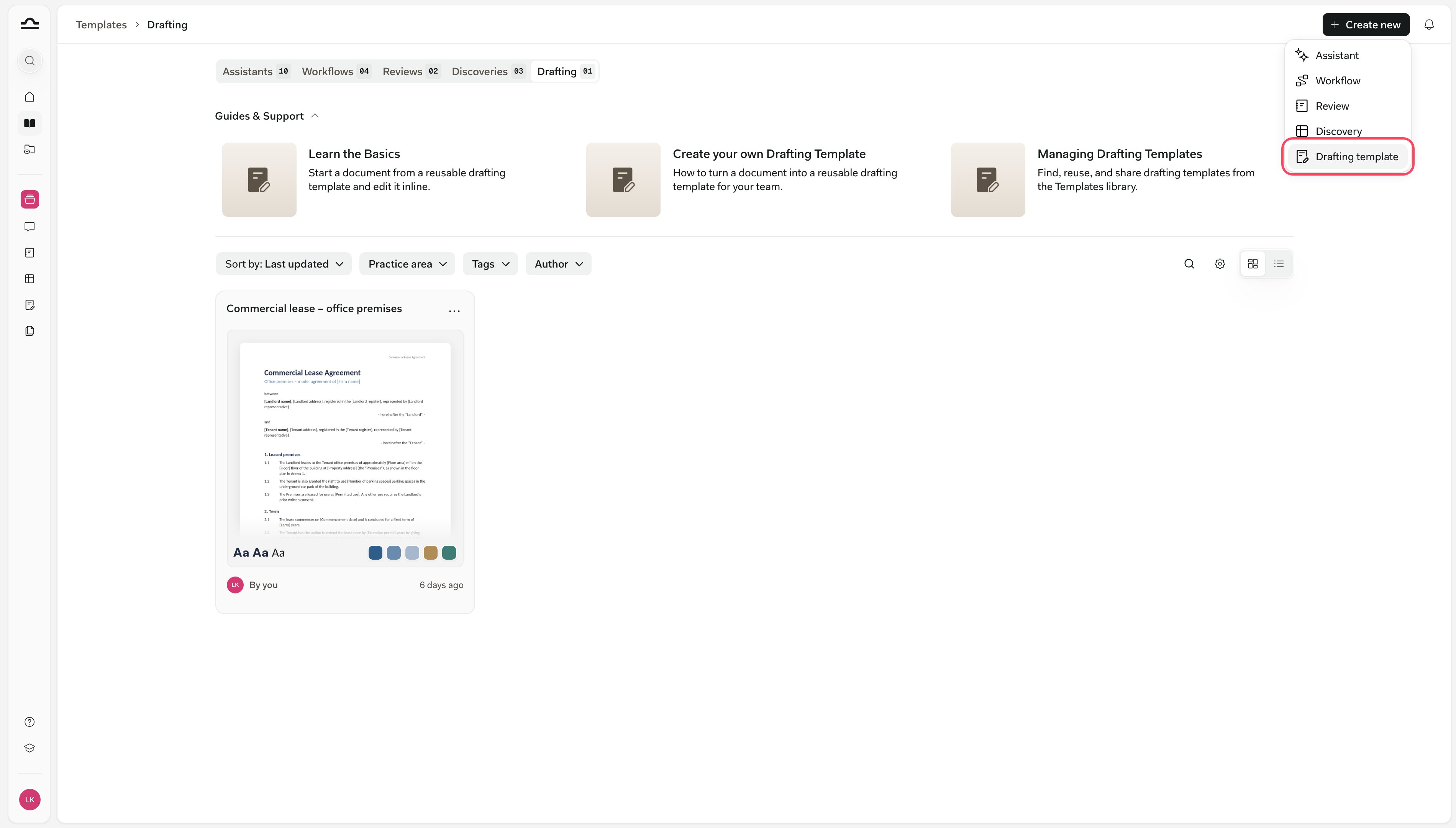 In **Templates**, open the **Drafting** tab, click **Create new** and choose **Drafting template**.
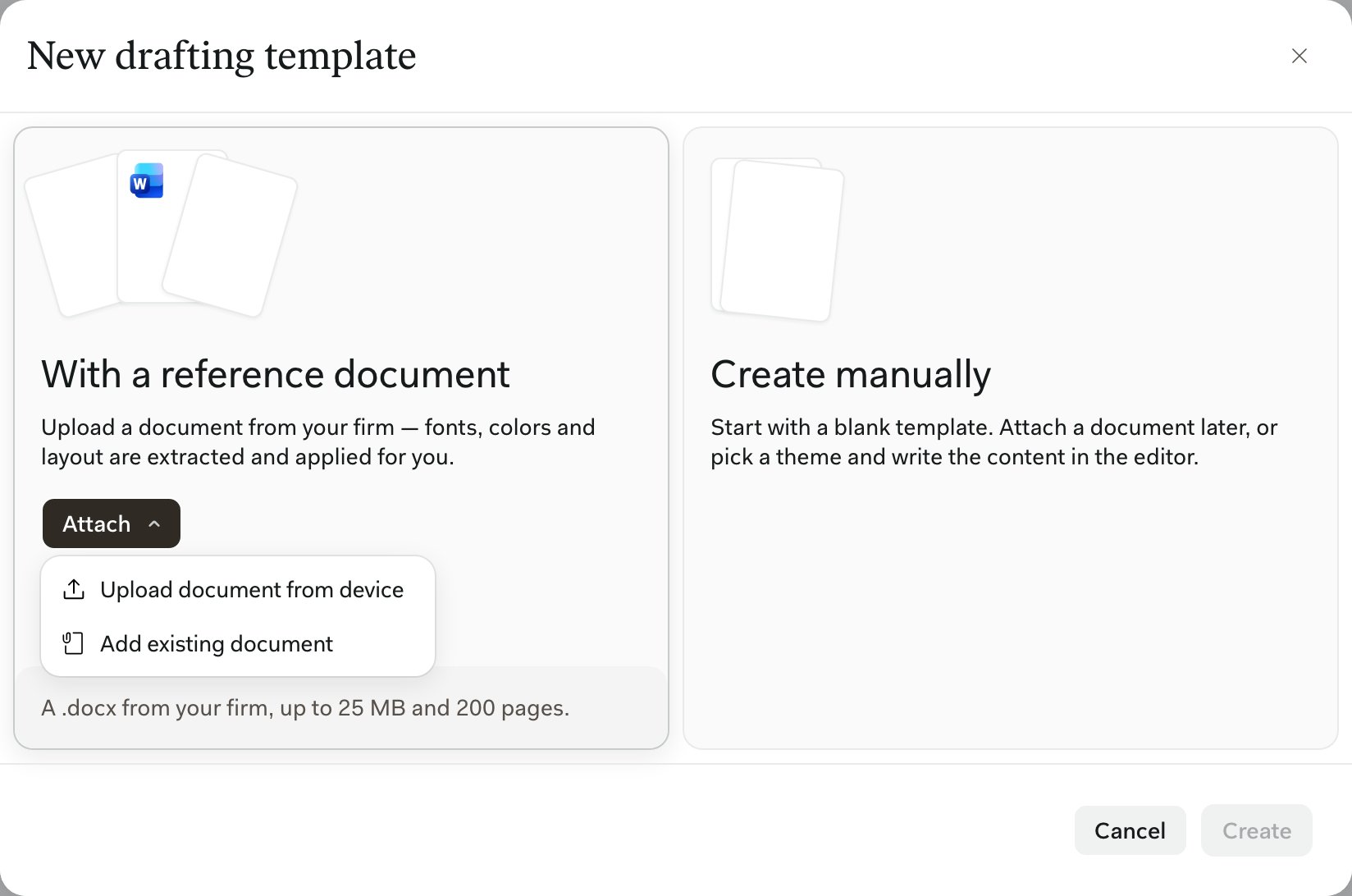
Choose **With a reference document**, then **Attach**. **Upload document from device** takes a file from your computer, and **Add existing document** takes one that's already in Libra. Then click **Create**.
In **Templates**, open the **Drafting** tab, click **Create new** and choose **Drafting template**.
Choose **With a reference document**, then **Attach**. **Upload document from device** takes a file from your computer, and **Add existing document** takes one that's already in Libra. Then click **Create**.
 The **Content** step shows the reference document page by page, as it will load into every new draft. **Edit** opens it in the Editor and **Replace** swaps in a different file.
The **×** on the file name removes it, and new drafts then start from the theme alone.
Libra warns you if the document is styled by direct formatting, has no colour theme or has no recognisable headings. Fix the styles in Word and replace the file, or adjust the theme in the next step.
The **Content** step shows the reference document page by page, as it will load into every new draft. **Edit** opens it in the Editor and **Replace** swaps in a different file.
The **×** on the file name removes it, and new drafts then start from the theme alone.
Libra warns you if the document is styled by direct formatting, has no colour theme or has no recognisable headings. Fix the styles in Word and replace the file, or adjust the theme in the next step.
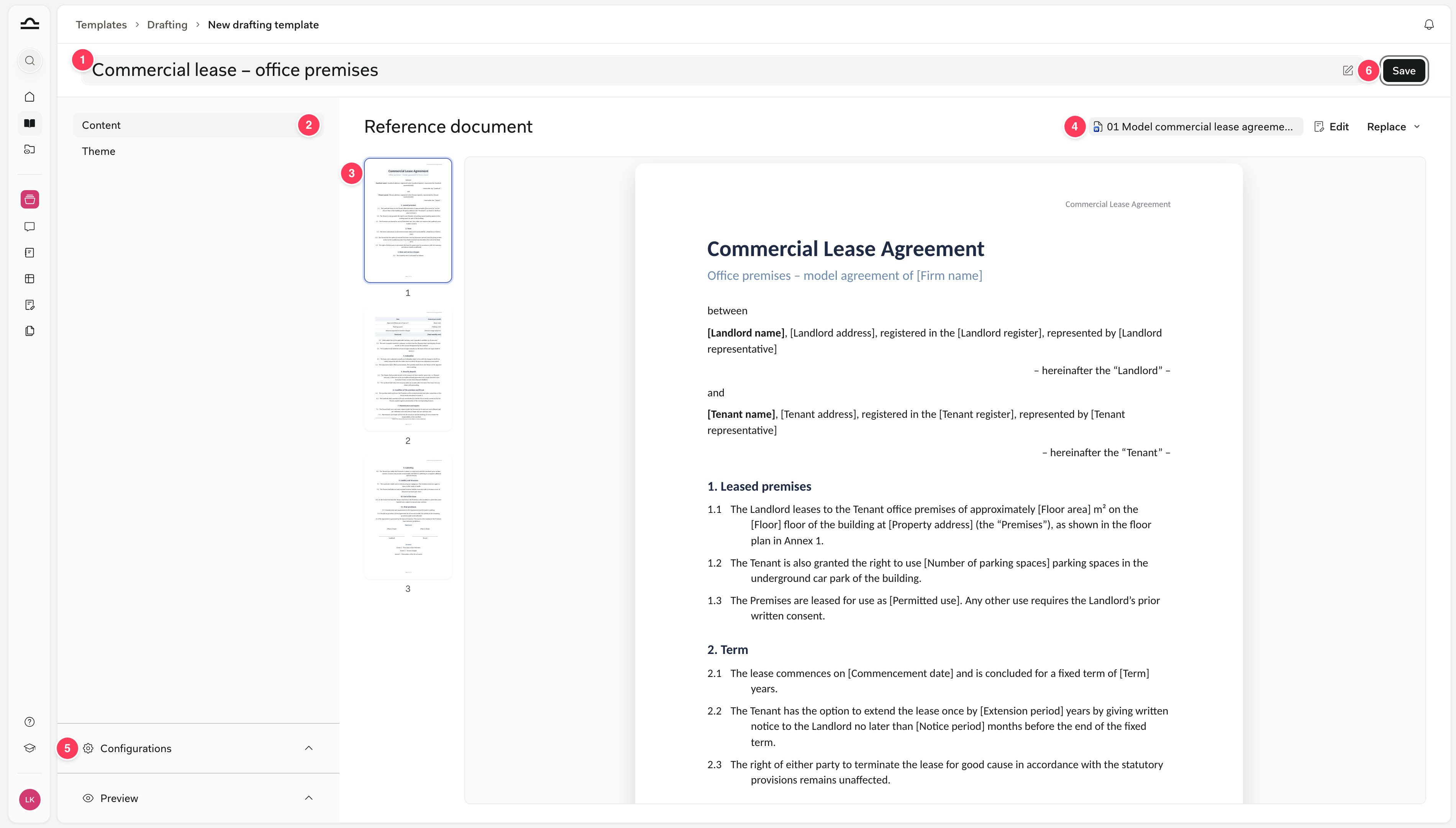 1. The template name
2. The **Content** and **Theme** steps
3. The reference document, page by page
4. The file, with **Edit** and **Replace**
5. **Configurations** and **Preview**
6. **Save**
1. The template name
2. The **Content** and **Theme** steps
3. The reference document, page by page
4. The file, with **Edit** and **Replace**
5. **Configurations** and **Preview**
6. **Save**
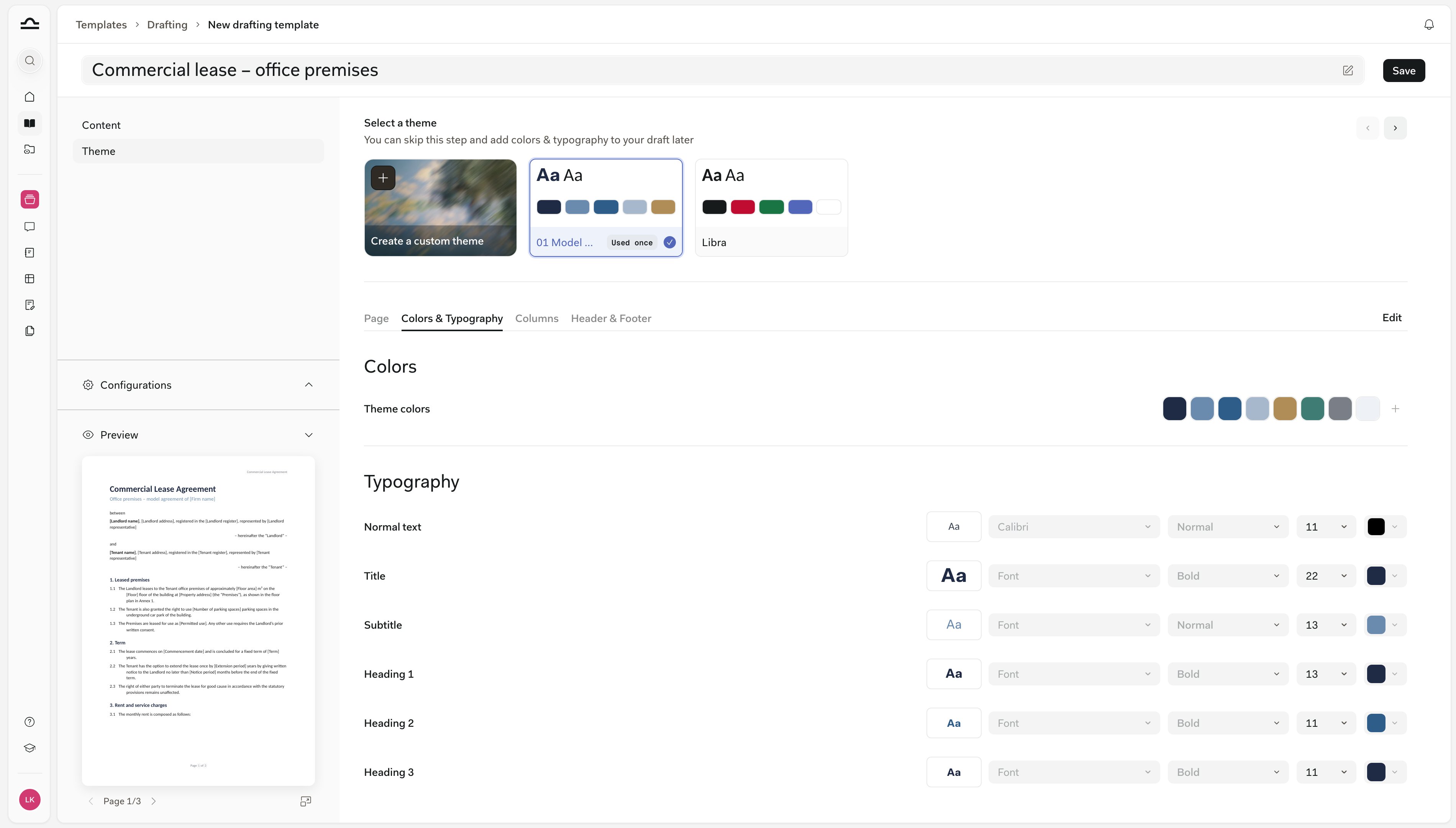 The **Theme** step starts on the theme Libra extracted from the file. If one of your own themes already has the same styles and colours, Libra picks that one instead, and each card says how many templates use it.
The step shows the **Theme colors** and a style for **Normal text**, **Title**, **Subtitle** and **Heading 1** to **Heading 3**; page settings sit on the other tabs.
Keep that theme, pick another such as **Libra**, or **Create a custom theme**. **Remove from template** leaves the template without a theme, so drafts keep the reference document's own formatting.
A template's theme is locked until you click **Edit**, because a change reaches every template that uses it. Libra names those templates before you confirm.
Name the template at the top, add a practice area, tags and jurisdictions under **Configurations**, check the **Preview**, then click **Save**. Nothing is stored until you save, and a template needs a reference document or a theme. See [Practice areas & tags](/en/features/templates/practice-areas-and-tags).
### From a draft
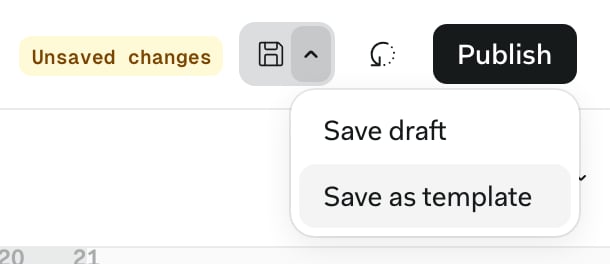
You can turn any draft you can edit into a template, including one you wrote with Libra. In the Editor, click the arrow next to **Save** and choose **Save as template**.
The **Theme** step starts on the theme Libra extracted from the file. If one of your own themes already has the same styles and colours, Libra picks that one instead, and each card says how many templates use it.
The step shows the **Theme colors** and a style for **Normal text**, **Title**, **Subtitle** and **Heading 1** to **Heading 3**; page settings sit on the other tabs.
Keep that theme, pick another such as **Libra**, or **Create a custom theme**. **Remove from template** leaves the template without a theme, so drafts keep the reference document's own formatting.
A template's theme is locked until you click **Edit**, because a change reaches every template that uses it. Libra names those templates before you confirm.
Name the template at the top, add a practice area, tags and jurisdictions under **Configurations**, check the **Preview**, then click **Save**. Nothing is stored until you save, and a template needs a reference document or a theme. See [Practice areas & tags](/en/features/templates/practice-areas-and-tags).
### From a draft
You can turn any draft you can edit into a template, including one you wrote with Libra. In the Editor, click the arrow next to **Save** and choose **Save as template**.
 The template editor opens over the draft. Your document, unsaved edits included, becomes the reference document, and the draft's name becomes the template name. The steps are the same as above.
**Save** stores the template and leaves the draft as it was. **Open template** in the confirmation takes you to the new template.
To start from a blank page instead, choose **Create manually** in the New drafting template dialog. The template editor opens on an empty Content step: pick a theme, then click **Edit** to write the text in the Editor.
## Start a draft from a template
Hover a template and click **Use**, in **Templates** › **Drafting** or in the templates strip on the Drafting page. Libra creates an independent copy in the project's Drafts folder and applies the template's theme, so changes to the draft never touch the template.
Then let the Editor chat fill the blanks. Attach the client's instructions, for example an email thread you exported from Outlook with the Libra add-in, and ask: *"Fill in the bracketed blanks from the attached email."*
Libra fills each blank on its own and tells you which ones are still open, such as the place and date of signing. In **Editing** mode, **Show changes** walks you through every fill.
## Change a template
Open a template from **Templates** › **Drafting** to change it, then click **Save**. Drafts already started from it keep their content; if you change the theme, they get the option to apply it.
To change a template's text, click **Edit** on its Content step. The Editor opens in template mode, with the banner *You are editing the template "…"*, and nothing autosaves.
**Save** updates the template for everyone who uses it, and the arrow next to it offers **Save as new template**. Template mode has no **Publish**.
A template built from a document in Libra notices when that document changes. The template editor then shows *The reference document has been updated since this template was built from it.*
**Update template** loads the newer version and keeps your theme and style choices, or dismiss the banner to keep the template as it is.
To adapt a colleague's template without changing theirs, **Duplicate** it from its **⋯** menu. The copy is yours. Only a template's author can delete it.
## Create a theme in the Editor
You don't need a template to make a theme. Format a draft the way you want it, then open **Theme** in the toolbar and choose **Create new theme**, or use **Save as theme** › **Save as new theme** at the bottom of the Formatting panel.
Opening or uploading a Word document doesn't create a theme by itself. Only a template's reference document does.
## Apply and change a theme
**Theme** in the toolbar lists your themes. Click one to apply it: Libra restyles the document's paragraph styles and colours, and its page setup if the theme has one. The confirmation has an **Undo** button.
The template editor opens over the draft. Your document, unsaved edits included, becomes the reference document, and the draft's name becomes the template name. The steps are the same as above.
**Save** stores the template and leaves the draft as it was. **Open template** in the confirmation takes you to the new template.
To start from a blank page instead, choose **Create manually** in the New drafting template dialog. The template editor opens on an empty Content step: pick a theme, then click **Edit** to write the text in the Editor.
## Start a draft from a template
Hover a template and click **Use**, in **Templates** › **Drafting** or in the templates strip on the Drafting page. Libra creates an independent copy in the project's Drafts folder and applies the template's theme, so changes to the draft never touch the template.
Then let the Editor chat fill the blanks. Attach the client's instructions, for example an email thread you exported from Outlook with the Libra add-in, and ask: *"Fill in the bracketed blanks from the attached email."*
Libra fills each blank on its own and tells you which ones are still open, such as the place and date of signing. In **Editing** mode, **Show changes** walks you through every fill.
## Change a template
Open a template from **Templates** › **Drafting** to change it, then click **Save**. Drafts already started from it keep their content; if you change the theme, they get the option to apply it.
To change a template's text, click **Edit** on its Content step. The Editor opens in template mode, with the banner *You are editing the template "…"*, and nothing autosaves.
**Save** updates the template for everyone who uses it, and the arrow next to it offers **Save as new template**. Template mode has no **Publish**.
A template built from a document in Libra notices when that document changes. The template editor then shows *The reference document has been updated since this template was built from it.*
**Update template** loads the newer version and keeps your theme and style choices, or dismiss the banner to keep the template as it is.
To adapt a colleague's template without changing theirs, **Duplicate** it from its **⋯** menu. The copy is yours. Only a template's author can delete it.
## Create a theme in the Editor
You don't need a template to make a theme. Format a draft the way you want it, then open **Theme** in the toolbar and choose **Create new theme**, or use **Save as theme** › **Save as new theme** at the bottom of the Formatting panel.
Opening or uploading a Word document doesn't create a theme by itself. Only a template's reference document does.
## Apply and change a theme
**Theme** in the toolbar lists your themes. Click one to apply it: Libra restyles the document's paragraph styles and colours, and its page setup if the theme has one. The confirmation has an **Undo** button.
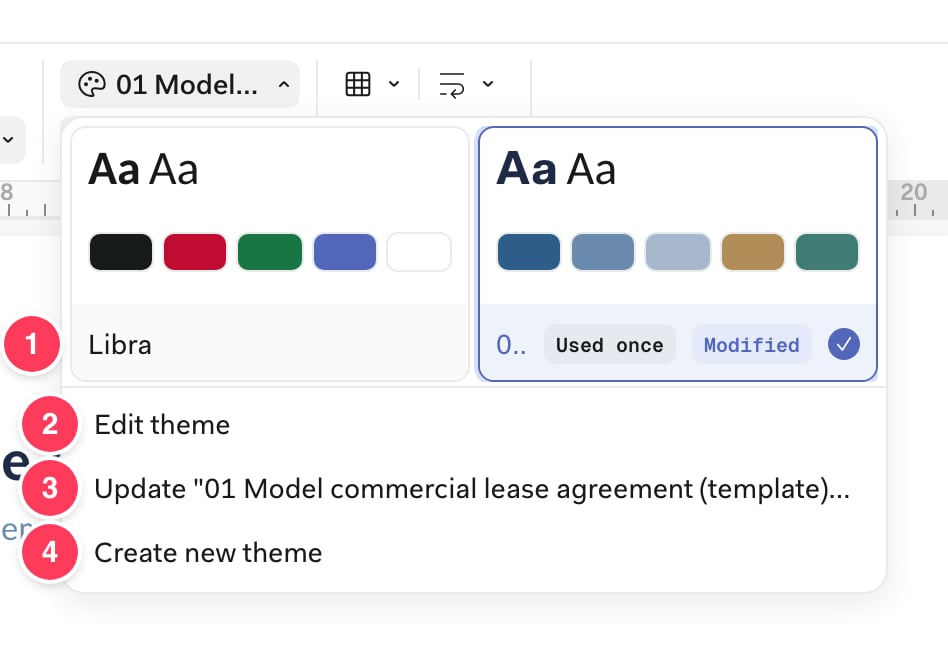 1. Your themes, each with how many templates use it. **Modified** marks the selected one when you've changed the document by hand. A card's **⋯** menu renames, duplicates or removes the theme, and **Used in** lists its templates.
2. **Edit theme** opens the theme's colours and styles in **Colors & Typography**.
3. **Update “…” to match document** saves the document's current look into the theme once it shows **Modified**. If templates use the theme, Libra names them and asks first.
4. **Create new theme**, see [Create a theme in the Editor](#create-a-theme-in-the-editor).
Under **Document styles** in **Colors & Typography**, **+** adds one of the document's own styles to the theme and **−** takes it out. The bin deletes a style, and if text still uses it, Libra asks which style that text should take instead.
A theme that templates use can be changed from any of them, and the change applies for everyone who uses those templates. Deleting such a theme, after a confirmation that names them, leaves the templates without one.
Drafts that use a changed theme show *The theme used in this document has been updated elsewhere*. Click **Apply changes** to take the update, or close the banner to keep the current look.
## Which "template" is which?
Libra has three things called templates, and they don't mix.
| Template | Where | What it's for |
| - | - | - |
| **Drafting template** | **Templates** › **Drafting** | Starting documents for the Editor, each with a theme |
| **Word template** | [Settings › Templates](/en/resources/account#templates) | The letterhead that Draft document in chat and Word exports build on |
| **Placeholder template** | [Word Add-in › Fill Placeholders](/en/integrations/word/placeholders) | A saved placeholder setup for filling documents inside Word |
The other tabs in **Templates** hold Assistants, Workflows, Playbooks and Discovery templates. See [About templates](/en/features/templates/about).
## Tips
* **Clean up the styles in Word first.** A reference document with real styles gives you a theme you rarely need to touch.
* **Mark every blank the same way**, like `[Tenant]`, so one prompt fills them all.
* **Name templates by document type and governing law**, like *Commercial lease (German law)*, and add a practice area so colleagues find them.
## Next steps
Give colleagues your templates, and the theme that comes with each one.
Format a draft and let Libra fill it in.
This documentation is built and hosted on [Mintlify](https://mintlify.com), a developer documentation platform.
1. Your themes, each with how many templates use it. **Modified** marks the selected one when you've changed the document by hand. A card's **⋯** menu renames, duplicates or removes the theme, and **Used in** lists its templates.
2. **Edit theme** opens the theme's colours and styles in **Colors & Typography**.
3. **Update “…” to match document** saves the document's current look into the theme once it shows **Modified**. If templates use the theme, Libra names them and asks first.
4. **Create new theme**, see [Create a theme in the Editor](#create-a-theme-in-the-editor).
Under **Document styles** in **Colors & Typography**, **+** adds one of the document's own styles to the theme and **−** takes it out. The bin deletes a style, and if text still uses it, Libra asks which style that text should take instead.
A theme that templates use can be changed from any of them, and the change applies for everyone who uses those templates. Deleting such a theme, after a confirmation that names them, leaves the templates without one.
Drafts that use a changed theme show *The theme used in this document has been updated elsewhere*. Click **Apply changes** to take the update, or close the banner to keep the current look.
## Which "template" is which?
Libra has three things called templates, and they don't mix.
| Template | Where | What it's for |
| - | - | - |
| **Drafting template** | **Templates** › **Drafting** | Starting documents for the Editor, each with a theme |
| **Word template** | [Settings › Templates](/en/resources/account#templates) | The letterhead that Draft document in chat and Word exports build on |
| **Placeholder template** | [Word Add-in › Fill Placeholders](/en/integrations/word/placeholders) | A saved placeholder setup for filling documents inside Word |
The other tabs in **Templates** hold Assistants, Workflows, Playbooks and Discovery templates. See [About templates](/en/features/templates/about).
## Tips
* **Clean up the styles in Word first.** A reference document with real styles gives you a theme you rarely need to touch.
* **Mark every blank the same way**, like `[Tenant]`, so one prompt fills them all.
* **Name templates by document type and governing law**, like *Commercial lease (German law)*, and add a practice area so colleagues find them.
## Next steps
Give colleagues your templates, and the theme that comes with each one.
Format a draft and let Libra fill it in.
This documentation is built and hosted on [Mintlify](https://mintlify.com), a developer documentation platform.